Tui-Na Bodywork in Los Angeles
Tui-Na bodywork in Silver Lake, Los Angeles. A clinical Chinese manipulation therapy, less aggressive than chiropractic, more pointed than typical massage, and selected when your case calls for direct manual work alongside acupuncture.
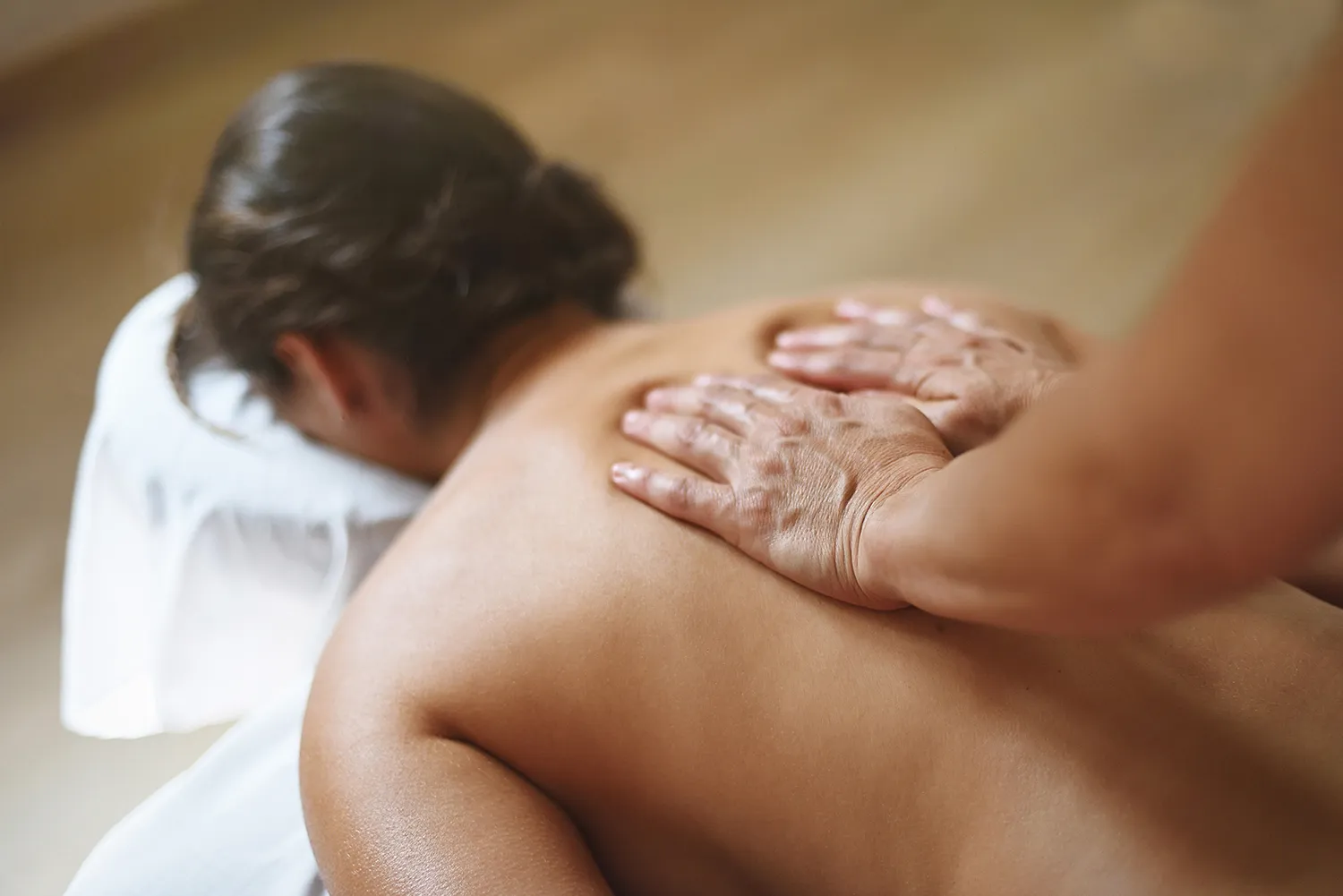
Clinical bodywork, guided by the same map as the needles.
Tui-Na, literally “push-grasp,” is the manual therapy of Chinese medicine: a hands-on discipline that sits somewhere between therapeutic stretching and deep-tissue massage, and one of the original branches of the medicine alongside acupuncture and herbs. It is less aggressive than a chiropractic adjustment and far more targeted than a relaxation massage, because it is guided by the same diagnostic map as your acupuncture, the channels, points, and patterns specific to your case.
Rather than working the whole body for general relaxation, a Tui-Na session concentrates on the structures driving your complaint. Pressure, traction, kneading, stretching, and joint mobilization are applied along the meridians and at the acupoints that correspond to your condition, releasing trigger points, restoring circulation, and freeing up restricted movement. The framework is the same one we use with needles; the tool is simply a pair of hands.
It is rarely booked as a standalone visit. More often, Tui-Na is folded into an acupuncture session when a case has a strong musculoskeletal component, a locked shoulder, a stiff neck, a hip that won’t let go, because the manual work accelerates what the needles are already doing. It’s also the natural choice when you’re needle-sensitive but still need direct, physical release.
This is one thread of our Silver Lake acupuncture practice. We bring it in when your pattern calls for it.
The mechanism, broken down.
Three families of technique, chosen for whether your case needs point release, restored range of motion, or broad clearing along a channel.
Acupressure
Sustained, precise pressure at acupuncture points releases trigger points and restores circulation, particularly useful when needles aren’t indicated or you’re needle-sensitive.
Mobilization
Gentle joint mobilization and guided stretching restore range of motion in the shoulders, hips, and spine, without the high-velocity “cracking” adjustments of chiropractic.
Channel work
Sweeping, kneading techniques along the meridians clear stagnation across a broader region, the approach favored for back, neck, and hip patterns that span more than one point.
Common reasons patients use it.
Tui-Na is added when a case has a clear musculoskeletal component, the tight, restricted, mechanical patterns that respond to direct manual work.
What you can expect from it.
What hands-on work adds to a course of care.
Targeted, not generic
Where a spa massage works broadly for relaxation, Tui-Na concentrates on the exact structures and channels driving your complaint, the same ones your acupuncture addresses.
A needle-free option
For patients who are needle-sensitive or simply prefer hands-on work, Tui-Na delivers much of the same point-based effect through sustained manual pressure.
Restores movement, not just comfort
Mobilization and stretching free up restricted joints and shortened tissue, so you leave with more range of motion, not only less ache.
Accelerates your acupuncture
Combined in a single visit, manual release and needling reinforce each other, which is why most musculoskeletal cases get both.
Is this right for you?
Tui-Na fits some cases and some bodies better than others. The general picture:
A good fit if…
- Your complaint is musculoskeletal, tight, stiff, or restricted in movement
- You’re needle-sensitive but still want direct, physical release
- You want to speed recovery between acupuncture visits
- You have a frozen shoulder, stiff neck, or stubborn hip pattern
- You prefer hands-on work to passive treatment
Not the right tool if…
- You have acute trauma, a fracture, or a severe disc injury that hasn’t been medically evaluated
- You have severe osteoporosis or very fragile bones, vigorous manual work isn’t appropriate
- There is active infection, inflammation, or skin breakdown over the area
- You’re pregnant, some techniques and positions are modified or avoided
If you’ve had recent imaging, surgery, or a diagnosed injury, bring the details, we’ll adapt the pressure and technique to your case, and coordinate with your physician or physical therapist when it makes sense.
Practical questions.
A first visit answers it.
An initial consultation of up to 90 minutes determines whether this modality is part of your plan, and what else might pair with it.